Background
I had the privilege of participating in Girls In Tech’s Hack for the Environment 2023 hackathon, joining a team of 3 UX designers. In my capacity as UX Researcher, I played a pivotal role in developing an MVP tech solution that leverages AI technology to address one of the world’s most pressing global challenges.
In my role, I followed a design thinking process, spearheading primary and secondary research, meeting with experts in the design field, orchestrating user interviews, guiding data synthesis, defining project scopes, and formulating innovative design solutions.
The Problem
Less than 9% of all plastics are recycled globally.
The recycling process incurs high energy costs, particularly with additional steps like post-consumer selection and washing. Despite collecting 15% of plastic for recycling, approximately 40% of that ends up as residues. The initial objective of this project was to enhance this recycling rate.


User Research
Why aren't users recycling well?
After conducting preliminary secondary research to get our footing on the issue, we came to our first assumption. The initial hypothesis suggested that users might not be recycling adequately due to their attitudes, habits, and lack of knowledge concerning recycling.
Survey Insights
Users are Environmentally Aware, but with Moderate Recycling Performances
Drawing insights from 66 survey respondents, consistent patterns emerged. Respondents self-reported:
User Interviews
Understanding Recycling Challenges
With a slight majority of respondents attesting to good plastic recycling habits and a general awareness of the positive impact of their actions, my focus shifted to uncovering the challenges faced by the near-half of respondents reporting a less-than-satisfactory relationship with recycling. The key insights that emerged from these conversations emphasized 4 pivotal themes:
Data Synthesis
There isn't a "one-size-fits-all" approach to motivate users to recycle.
Our discoveries challenged our initial assumption. The research revealed that factors such as location dynamics, individual responsibility, lack of education, and diverse socioeconomic circumstances were too substantial and diverse to adopt a universal approach for motivating users to recycle, especially on a global scale. Given these complexities and identified pain points, it became evident that we needed to redefine our scope. Rather than solely focusing on increasing the recycling rate, we revised our project goal to reflect the overarching issue.
Refining the Scope
Addressing the issue of the low recycling rate from its source.
[image]
Instead, we chose to develop a solution aimed at reducing the overall consumption of plastic. This strategic shift redirected our focus from the specific challenge of recycling to a broader perspective centered around sustainability.
Ideation
Designing a product that can be easily integrated into the lifestyles of users.
From my extensive user interviews, I was able to distill my insights into three distinct personas, each capturing different levels of commitment and care in recycling:
[image]
Across all levels of recycling habits, these three personas consistently faced significant challenges, influencing our design decisions:
Knowledge Disparity
Convenience Requirements
Limited Awareness of Impact
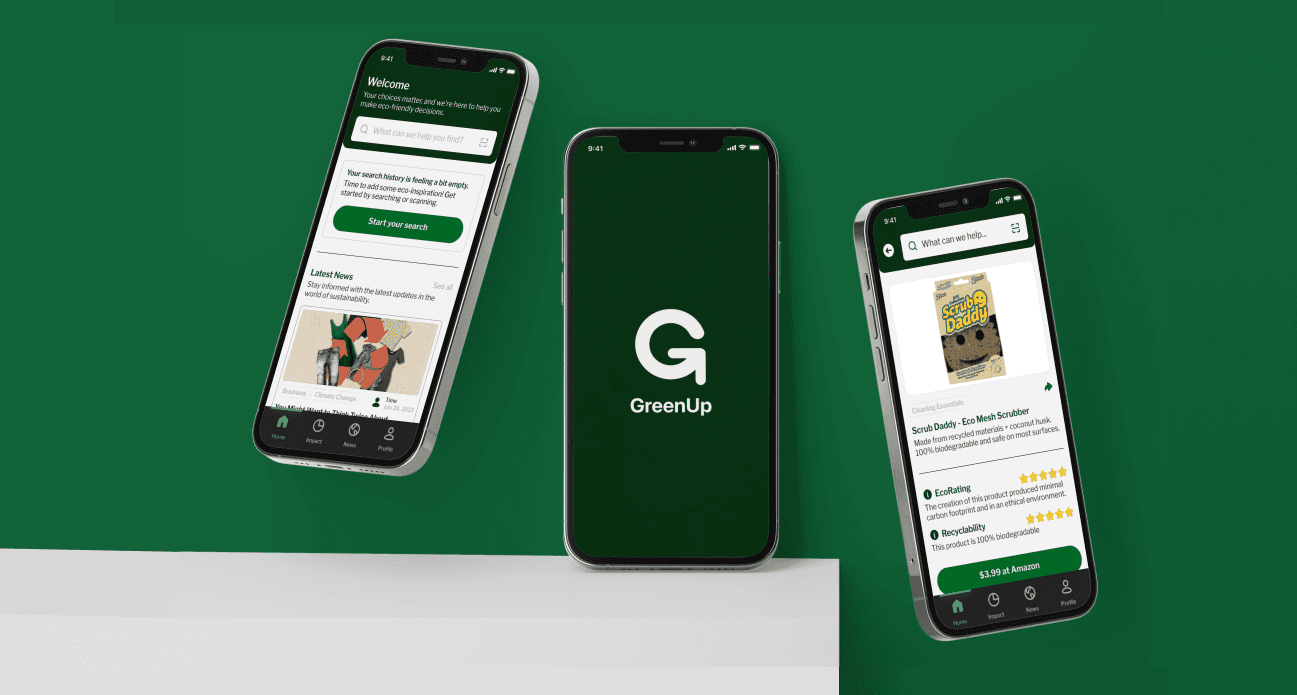
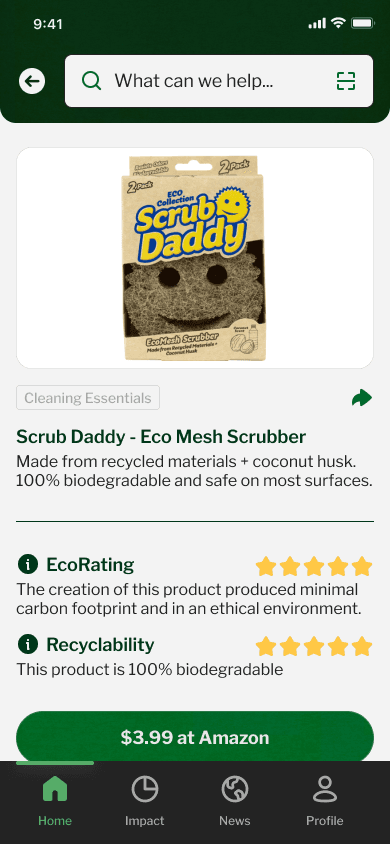
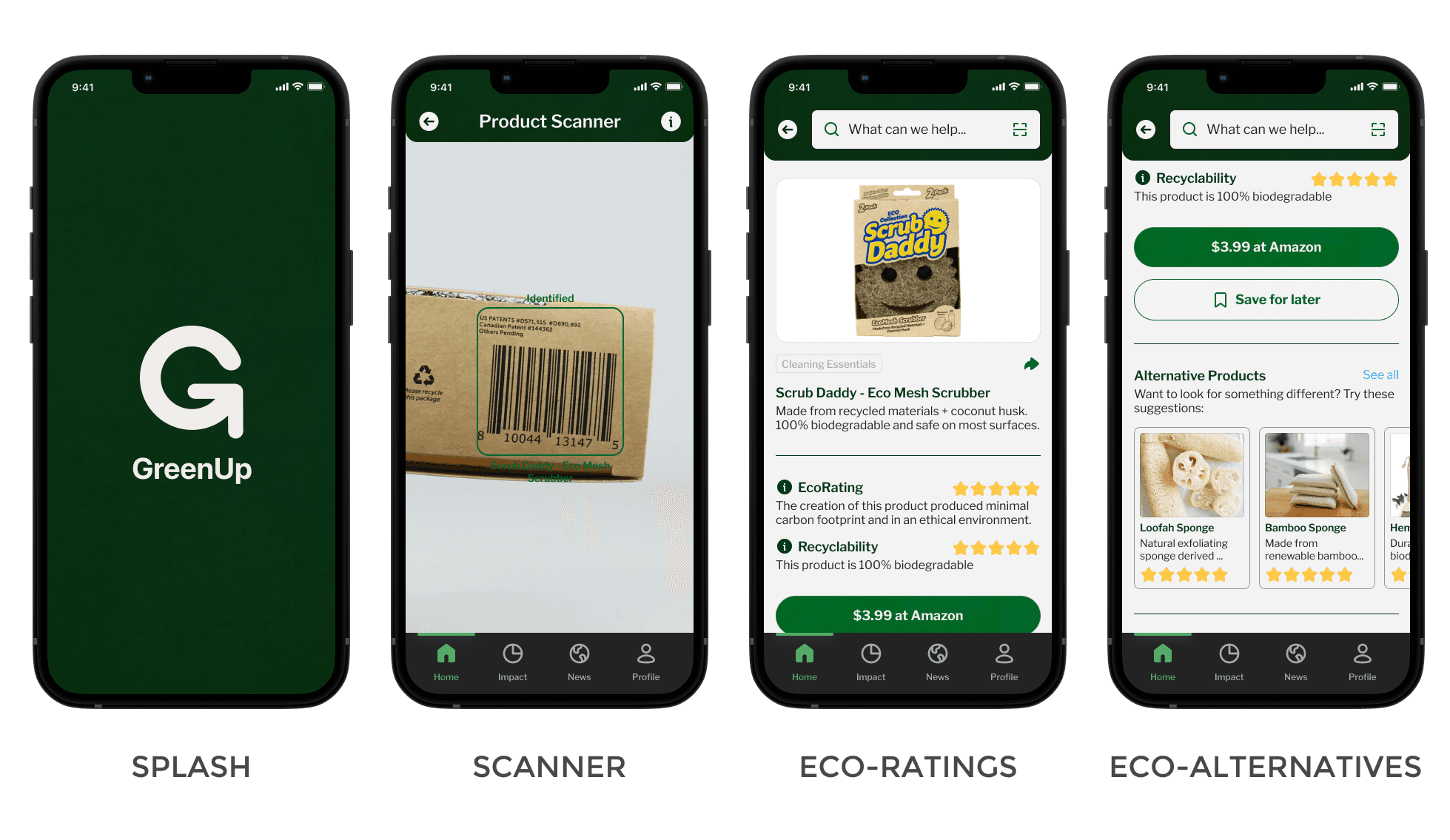
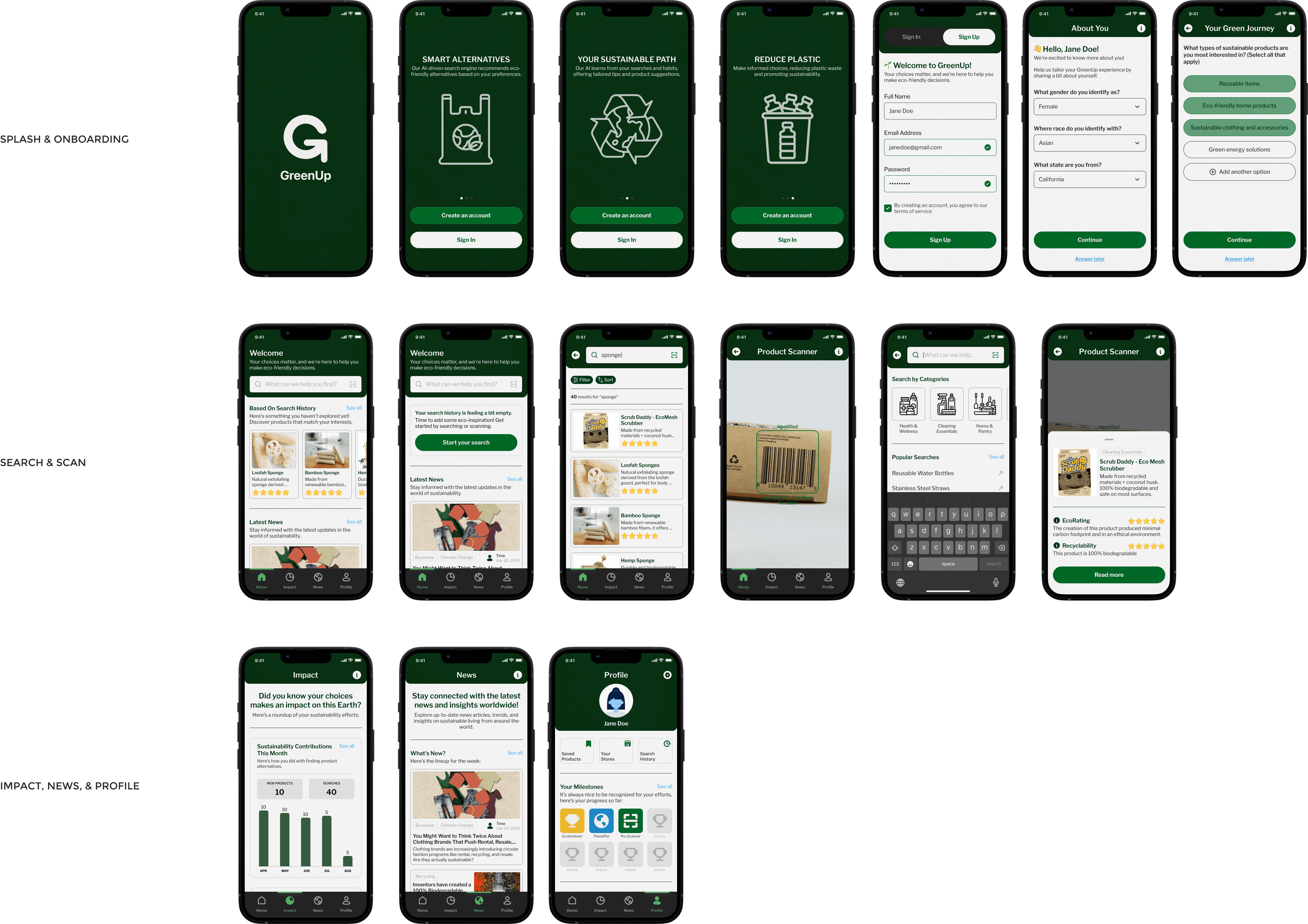
After conducting a thorough competitive analysis, our goal was to craft a product seamlessly integrated into users' daily lives, transcending geographical, socioeconomic, and knowledge barriers. This resulted in the conception of GreenUp, a solution that users could effortlessly incorporate into their routine while shopping for their everyday needs.
Information Architecture
GreenUp's central feature is its intuitive product search and scan function. To enhance user experience, we strategically prioritized this functionality on the Homepage by carefully organizing the product flow and sitemap. Additionally, we incorporated an Impact and Education tab to address other user pain points related to recycling.